
Our 5 top-tips for vocal health

Hydration
Hydration is absolutely vital for vocal health—think of it as the backstage crew that keeps your voice performing at its best. Here’s why it matters:
- Lubricates your vocal folds: Your vocal folds (or cords) are made of delicate, layered tissue that vibrates rapidly to produce sound. Hydration keeps them moist, pliable, and able to seal properly, which is essential for clear tone and pitch control.
- Supports brain function: Voice production isn’t just mechanical—it’s neurological. Adequate hydration helps maintain optimal brain function, which supports coordination, memory, and vocal control.
Alcohol, caffeine, and certain medications can dry out your vocal folds. If you’re performing or speaking regularly, it might be wise to limit these. You don’t only have to have water – studies have found that skimmed milk and coconut water are super helpful at maintaining hydration!

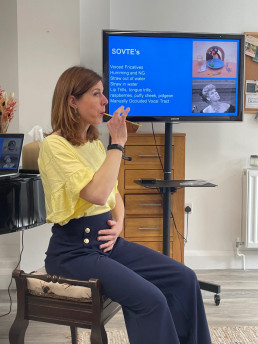
Bubbling and straw phonation
Blowing bubbles and vocalising through a straw are deceptively simple but incredibly effective vocal exercises. They fall under the category of Semi-Occluded Vocal Tract (SOVT) exercises, which means they partially close off the vocal tract to create back pressure. This back pressure is the magic ingredient that helps your voice function more efficiently and safely.
The back pressure balances the air pressure above and below the vocal folds, minimising the force with which they collide. This lowers the risk of strain or injury. The gentle resistance helps the folds vibrate more symmetrically, which enhances tone and clarity.
How to do it: Place a straw into a glass of water (about 1 inch deep), seal your lips around the straw, and hum while blowing bubbles. Try pitch glides or simple melodies to explore your range.
Nutrition
Performing, singing, and speaking can be a lot of work – it’s important that you fuel your body sufficiently so you have the energy to get through! As well as eating in general to keep your energy up, there are some foods that can be particularly beneficial for voice users.
- Hydrating foods: cucumbers, melons, oranges, soups
- Bananas with nut butters – easy to digest, slow-release energy, protein and healthy fats
- Sweet potato and other complex carbohydrates for sustained energy
Everyone is different – find what foods fuel you best and allow your voice to work how you want it to.


Using a nebuliser
As well as steaming (which you can do easily with a bowl, hot water, and a towel over your head), you can use a portable nebuliser as a helpful tool to keep your voice in good condition. Using a nebuliser for vocal health is like giving your voice a direct spa treatment! Nebulisers produce a fine, cool mist through a mouthpiece or mask which provides hydration directly to the source of your sound. Topical hydration through steam or cool mist from a nebuliser is a great way to increase hydration and soothe irritated tissues, and can be a life saver in dry, or loud environments, when you’re feeling poorly, or have to use your voice a lot.
Vocal rest – don’t forget to charge your battery!
Every time you use your voice, regardless of context, you are slowly chipping away at that battery. Bear in mind that you may not start every day with 100%…
- You can give your voice mini charges by taking short vocal naps (relative voice rest)
- If you are ill, it’s sometimes helpful to go on complete voice rest for 1 or 2 days to allow time for healing and recovery.
- Try to take at least a day or 2 each week where you can do much less vocally to allow for a full recharge.
Pay attention to your battery and schedule accordingly!
Sleep is also a big part of this – especially if you’re trying to learn music or a script. Rest and recovery are active parts of the learning process, not just breaks from it. In fact, according to The Sleep Foundation, not sleeping or getting enough sleep can lower your learning abilities by as much as 40%.